Vibe coding, without the credits
Keep vibe coding. Stop buying credits.
AALY is an alternative to Lovable, Bolt and Emergent for people who want to keep building with AI on the subscription they already pay for. Your own coding agent, such as Claude Code, Codex or Cursor, builds the app with a method a software architect would use, on a backend that keeps each customer's data apart for you, and publishes it at its own address. No credits, no recharges.
From a demo to an app you can run a business on
AI builders are great at getting a first version on screen fast. These are the things that matter next, with real customers, real data and the tenth change, and how AALY handles each one.
Customers seeing each other's data
Your second customer signs up and can read the first one's records, because a security rule on one table was never written. Nothing errors. It just leaks.
On AALY, keeping customers apart is done by the platform on every request. There is no rule for the AI to forget.
Every change breaks something else
You ask for one new field and a screen that worked yesterday stops working, because the tool rewrote code nobody read.
Your agent changes a definition, not a pile of generated backend code, and it tells you up front which decisions are hard to change later.
No plan anyone agreed to
The app is whatever the last prompt produced. There's no written list of what it should do, so nobody can say whether it's finished.
Your agent writes a spec in your words, numbers every business rule, and waits for your yes before building.
Nothing was actually checked
It looks right in the preview. Whether a full class really refuses a booking, or a member really can't open the staff screens, nobody tested.
Your agent checks each rule against sample data in a separate test area, and the results are written into a report you keep.
What building on AALY feels like
You talk to your agent in plain words, say about a bakery that takes pre-orders for weekend collection. It asks a few questions at a time, each with a suggested answer, and offers ideas you may not have thought of, like a weekend slot that closes itself once it is full. It feels like working with a software architect who listens first.
Then it writes the plan and asks for your approval, designs the data, builds the backend on AALY and the screens on top, checks each rule against sample data, publishes the app at your-app.aaly.cloud and hands you a user guide. The plan, the test report and the guide stay with the project, so next month's change starts from them instead of from scratch. The five steps, from your side →
Use the agent you already pay for
AALY sells no AI credits and has no recharges. You connect the coding agent you already have: Claude Code, Codex, Cursor, Antigravity, VS Code with Copilot, Windsurf, Gemini CLI or Claude. Your subscription to it stays as it is, and changing your app as often as you like never burns a second, credit-metered balance.
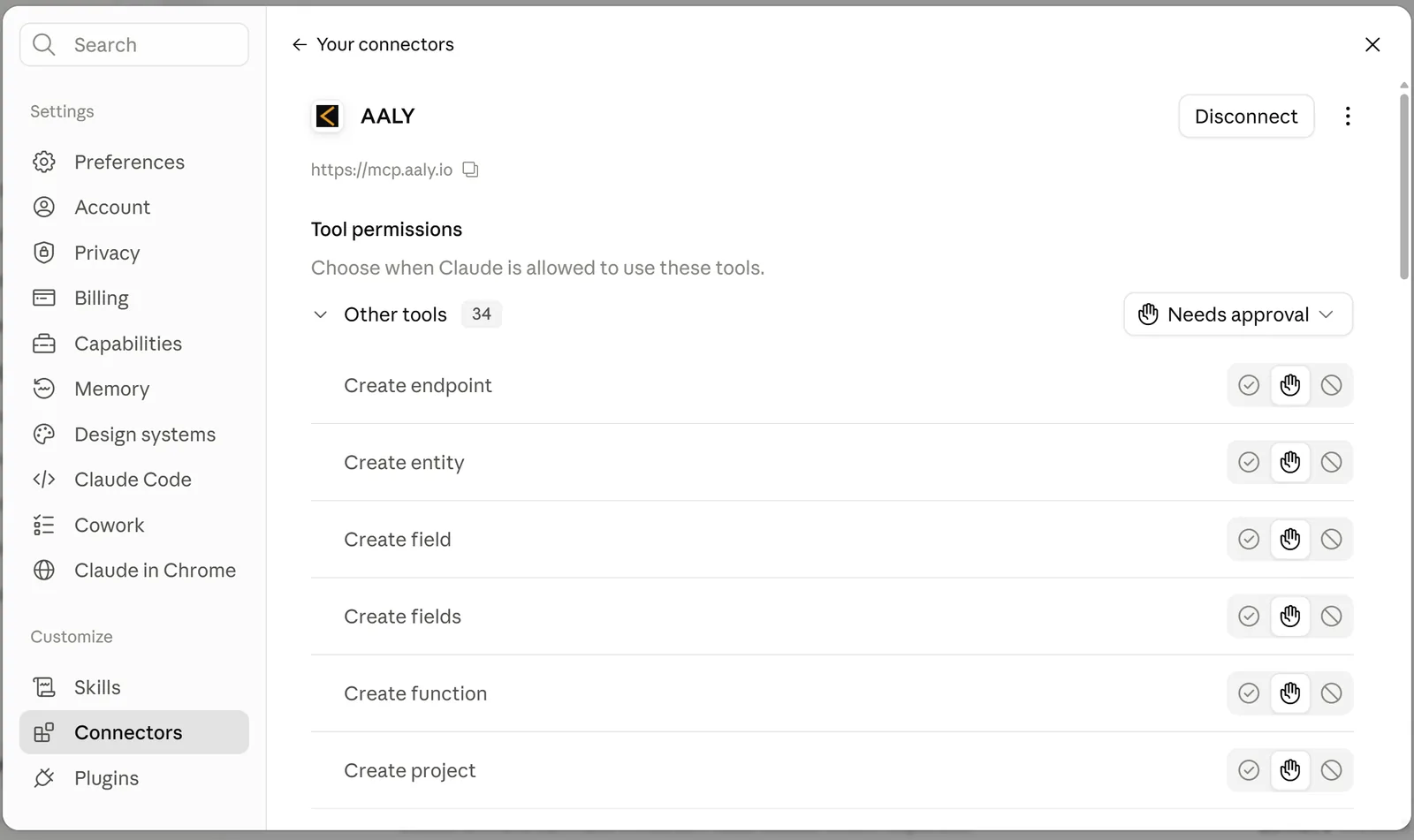
In Claude, search for AALY in the connector directory and connect. In Cursor, Codex or anything else that speaks MCP, add https://mcp.aaly.io as a custom connector and approve it in the browser. There is no API key to copy or accidentally commit.
Why it holds up
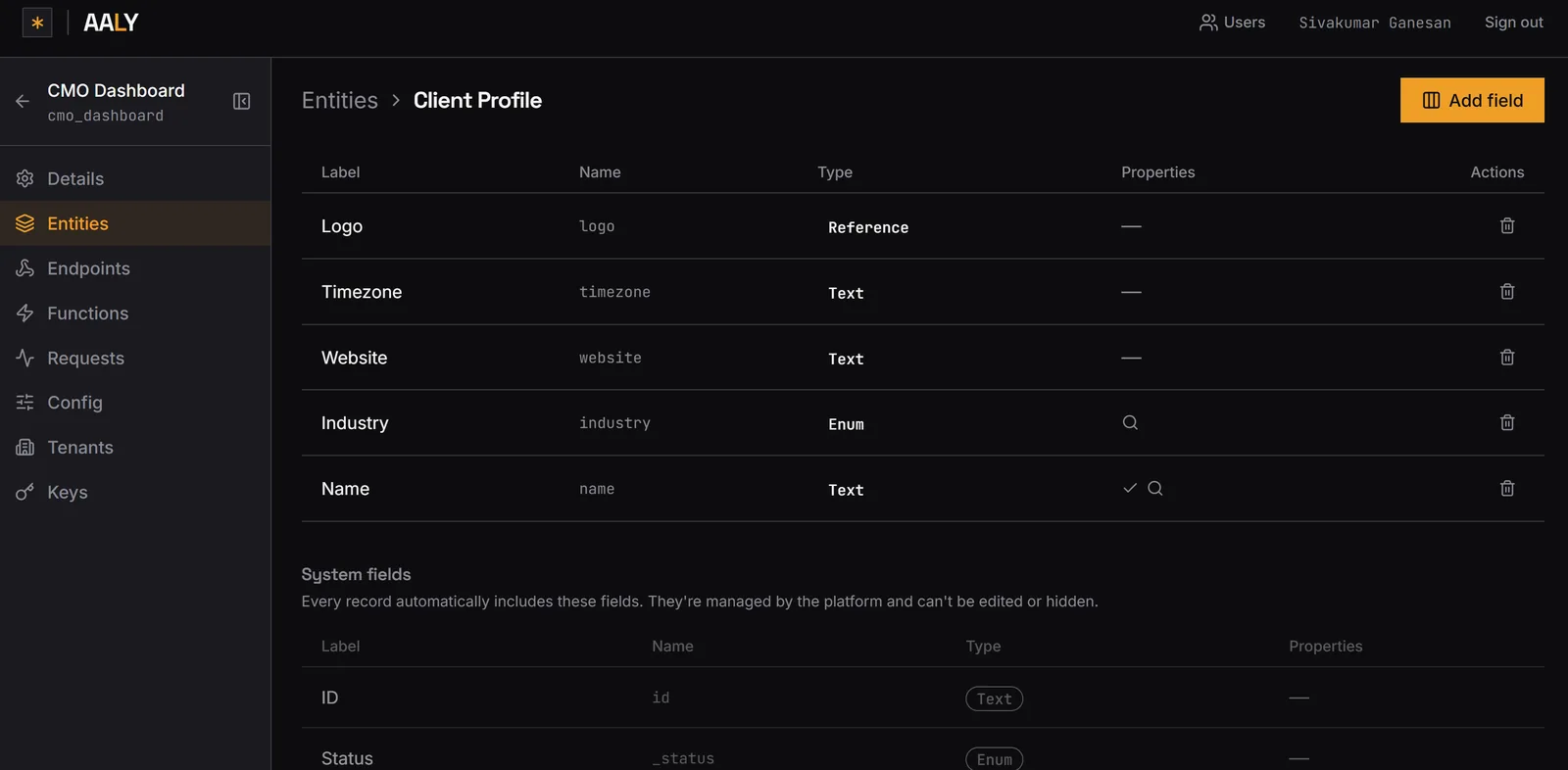
Your agent doesn't generate a backend for you to own. It describes the data (orders, products, collection slots, the fields on each and the rules between them) and AALY's engine runs the API from that description, with sign-up, logins, validation, file uploads, notifications and an OpenAPI spec built in. Every project keeps each customer's data in its own space, enforced below the API, so a record from another customer is simply not found. How that works →
Already have a frontend you like?
If it builds to static files (most Vite and React apps do), your agent can point it at an AALY backend rather than starting over, then publish it on AALY. Existing data can come across too: send your agent a spreadsheet and it imports the rows in batches through the API.
Building apps for clients rather than for yourself? There is a page for that → Comparing directly? AALY vs Lovable, Bolt, Emergent.
Questions people ask
- Is AALY a Lovable alternative?
- Yes. AALY is an alternative to Lovable, Bolt and Emergent that works with the coding agent you already use instead of a built-in AI billed in credits. Your agent plans the app with you, builds it on AALY's backend, checks each rule against sample data and publishes it at name.aaly.cloud.
- What backend should I use for vibe coding?
- AALY gives your coding agent a complete backend without writing backend code: a database, a REST API, sign-up and sign-in, file storage, notifications and server-side Functions, all run from a definition your agent writes. Each customer's data is kept apart by the platform, and AALY hosts the frontend too.
- Can I vibe code an app without buying AI credits?
- Yes. AALY sells no AI credits and has no recharges. You build with the AI subscription you already pay for, such as Claude, ChatGPT with Codex, Cursor or GitHub Copilot, and AALY's pricing is based on what your apps use: requests, projects, customers and storage.
- Can I move an app I built on Lovable or Bolt to AALY?
- Usually, yes. If your frontend builds to static files, as most Vite and React apps do, your agent can point it at an AALY backend and publish it on AALY. Send your agent your existing data as a spreadsheet and it imports the rows in batches through the API.
Three months free on Solo, then $10 a month.
100k requests+events a month, 2 projects, 10 customers and 4 GB: enough to put a real app in front of real customers, with no AI credits that run out while you are still building.
Start building